
Digital Camera Revolution in Slaughterhouses
Official titleRegulation on the Amendment of the Regulation on Specific Hygiene Rules for Food of Animal Origin
With the amendment it introduced to the Regulation on Specific Hygiene Rules for Food of Animal Origin, the Ministry of Agriculture and Forestry has introduced digital tracking, comprehensive imaging systems, and new standards regarding animal welfare for slaughterhouses.
Before
Digital tracking of animals, comprehensive imaging systems, and restraint methods are not explicitly stated or detailed in the existing regulation.
After
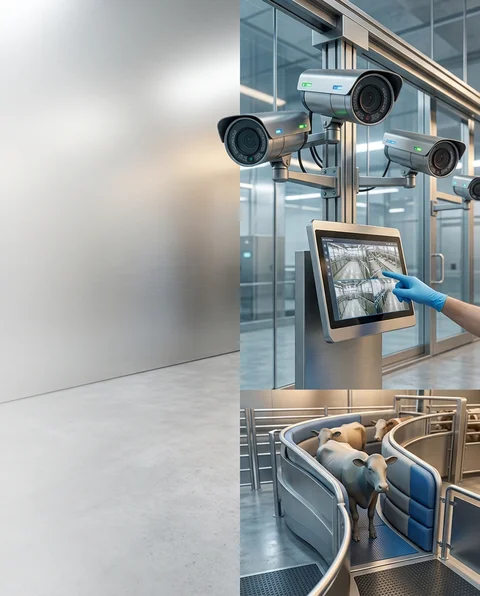
Digital animal tracking, as well as high-resolution, wide-angle imaging systems recording for at least one month, have been made mandatory in slaughterhouses. In addition, suspending or hoisting animals by their legs while conscious has been prohibited, and humane restraint equipment has been required. Similar monitoring systems and a tracking system for the number of slaughtered animals have also been introduced for poultry slaughterhouses.
Details of the Regulation
The amendments made introduce additions to Articles 12 and 19 of the Regulation on Specific Hygiene Rules for Food of Animal Origin published in the Official Gazette dated 27/12/2011 and numbered 28155. The subparagraphs added to Article 12 by Article 1 make it mandatory for slaughterhouses to possess the infrastructure to ensure the digital tracking of slaughtered animals and to comply with the procedures and principles determined by the Ministry. Furthermore, a requirement has been introduced to install imaging systems that are wide-angle, high-resolution, capable of recording for at least one month in animal lairage, slaughter, and handling areas, and accessible to provincial/district directorates of agriculture and forestry.
Another important regulation pertains to animal restraint methods. Accordingly, the mechanical shackling of animals' legs cannot be used as a stand-alone method; animals cannot be suspended or hoisted by their legs while conscious. Slaughterhouses are obligated to possess appropriate equipment that does not exert excessive pressure on the animal during restraint, does not have slippery flooring, operates quietly, does not move abruptly, and is free of sharp edges that could harm animals.
The subparagraphs added to Article 19 by Article 2 contain regulations specific to poultry slaughterhouses. A requirement has been introduced to install imaging systems that are wide-angle, high-resolution, capable of recording for at least one month across all handling areas, including animal holding, live animal shackling/hanging, slaughterhouse, evisceration, as well as chilling, cutting, and packaging areas, to monitor live animals, carcasses, by-products, and personnel movements, and to ensure these systems are accessible to provincial/district directorates of agriculture and forestry. Additionally, the establishment of a system to track the number of slaughtered poultry has also been stipulated. This Regulation shall enter into force on 1/1/2027.
Questions You Might Have
- How will these new regulations affect the ill-treatment of animals in slaughterhouses?
- The continuous recording of the slaughter process via wide-angle and high-resolution imaging systems and the audibility of these records by relevant ministerial units will significantly increase the capacity to detect and prevent ill-treatment. Furthermore, the prohibition of suspending conscious animals by their legs directly aims to protect animal welfare.
- By when do slaughterhouses have to comply with these new rules?
- Since this Regulation enters into force on January 1, 2027, slaughterhouses must complete the necessary infrastructure and equipment modifications by this date.
- Is there an additional specific regulation for poultry slaughterhouses?
- Yes, the installation of similar monitoring systems has also been made mandatory for poultry slaughterhouses. These systems will cover all areas, including animal holding, hanging, slaughter, evisceration, chilling, cutting, and packaging, and a separate system will also be established to track the number of slaughtered poultry.
Key Terms
- Görüntüleme Sistemleri
- High-resolution, wide-angle camera systems capable of recording for at least one month, installed in slaughterhouses to monitor the movements of live animals, carcasses, by-products, and personnel.
- Dijital Takip
- The electronic monitoring and recording of the movements and processes of slaughtered animals.
- Sabitleme Yöntemi
- Techniques and equipment used to restrict animal movements prior to slaughter. With the new regulation, humane methods that observe animal welfare and do not harm the animal have been made mandatory.
Affected Sectors
- Agriculture
- Livestock farming
- Food production
- Meat industry
Where we posted this
Follow Turkish legal developments
REGAS analyzed all 33 items in the Official Gazette of 21 July 2026; we published only 3 of them here.
REGAS summarizes every change in the Turkish Official Gazette in plain language and notifies you.
The REGAS app is currently Turkish-only. If you would like English in the app, the best way to make it happen is to support the developer: get the app and just say so.


REGAS Commentary
This amendment to the regulation contains significant steps aimed at enhancing animal welfare and ensuring food safety. Digital tracking and detailed camera systems for slaughterhouses will both allow for stricter supervision of hygiene standards and play a deterrent role in preventing ill-treatment of animals. In particular, the prohibition against suspending animals by their legs while conscious is a direct regulation aimed at reducing animal suffering during the slaughter process. Establishments will need to upgrade their infrastructure and equipment by the beginning of 2027 to comply with these new requirements. This may entail additional costs and compliance processes, particularly for small-scale slaughterhouses.